
Plan your trip
Flights, firearms, seasons and what to put in the bag. If it is not answered here, ask.
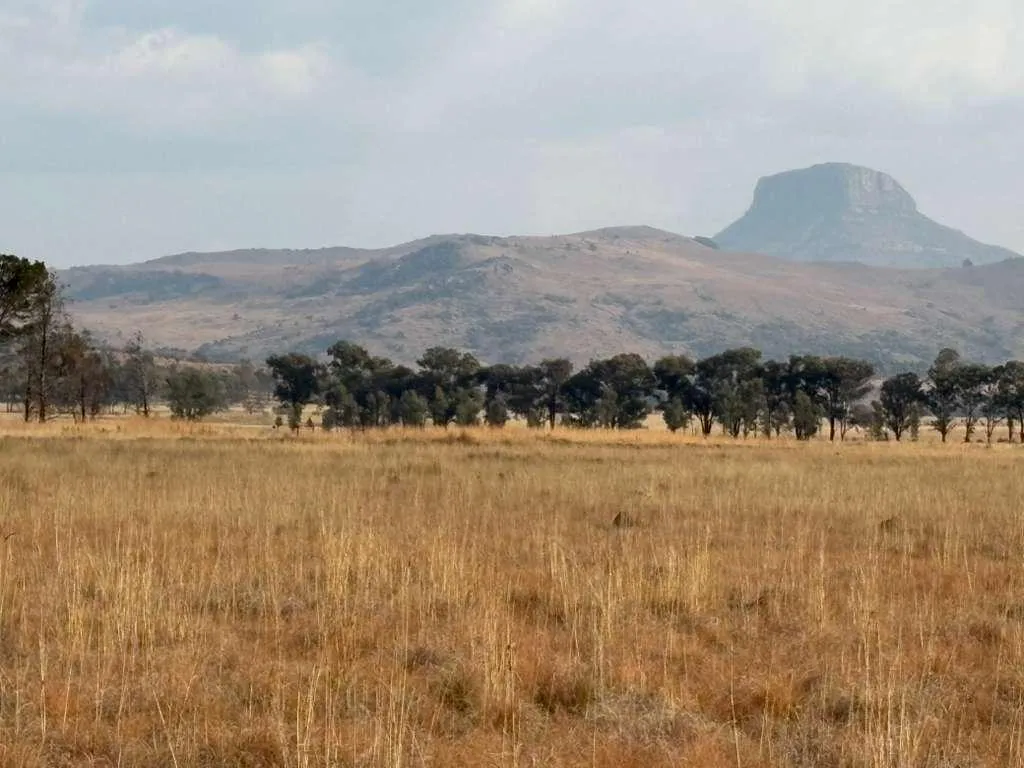
We hunt all year, but the prime months are April to September. It is winter here: dry, cool, clear mornings with the grass cured to gold, so the game is easy to spot and the walking is comfortable. Expect frost at dawn on the high ground and warm afternoons. October to March is greener and hotter, with afternoon storms, and still hunts well in the early morning.
Fly into King Phalo Airport (East London). There are daily connections from Johannesburg (O. R. Tambo) and Cape Town. We collect you at the airport and drive you to the lodge, and the transfer back is included too. If you are arriving with firearms, tell us your flight details so we can meet you at the police office in the terminal.
Visitors from the United States, the United Kingdom, most of the European Union, Canada, Australia and New Zealand do not need a visa for stays up to 90 days. Your passport must be valid for at least 30 days after you leave and have two blank pages. Check the current rules for your country before you fly.
Seven hunting days is the sweet spot for a plains game package of four to six animals. Ten days gives you time for the harder mountain species and a slower pace. Add a day either side for travel. Shorter hunts are possible; tell us what you have in mind.
Yes. Observers stay in the same rondavels, eat the same food and are welcome on the hunt or at the pool, at the observer daily rate. The lodge is a relaxed place for families, and the coast is close enough for a day of beaches, restaurants or horseback riding.
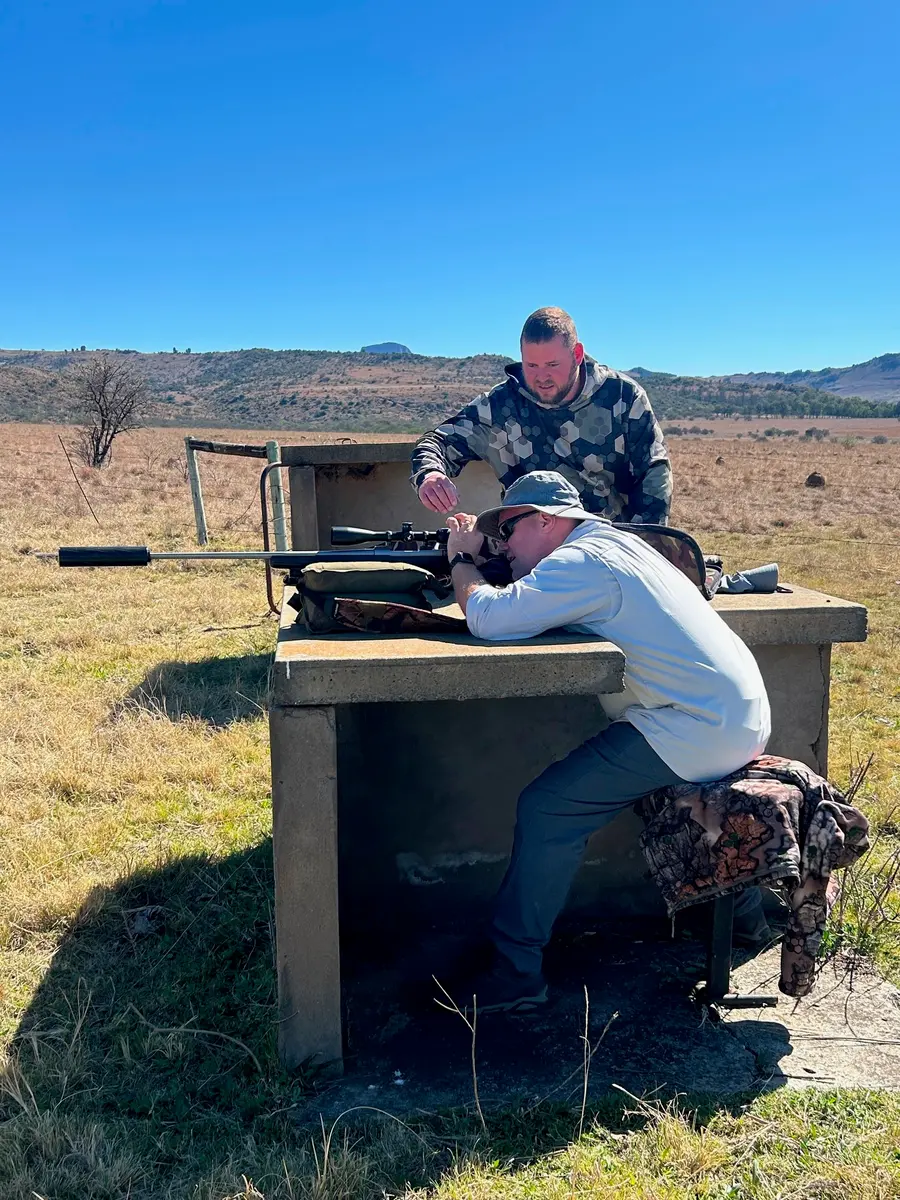
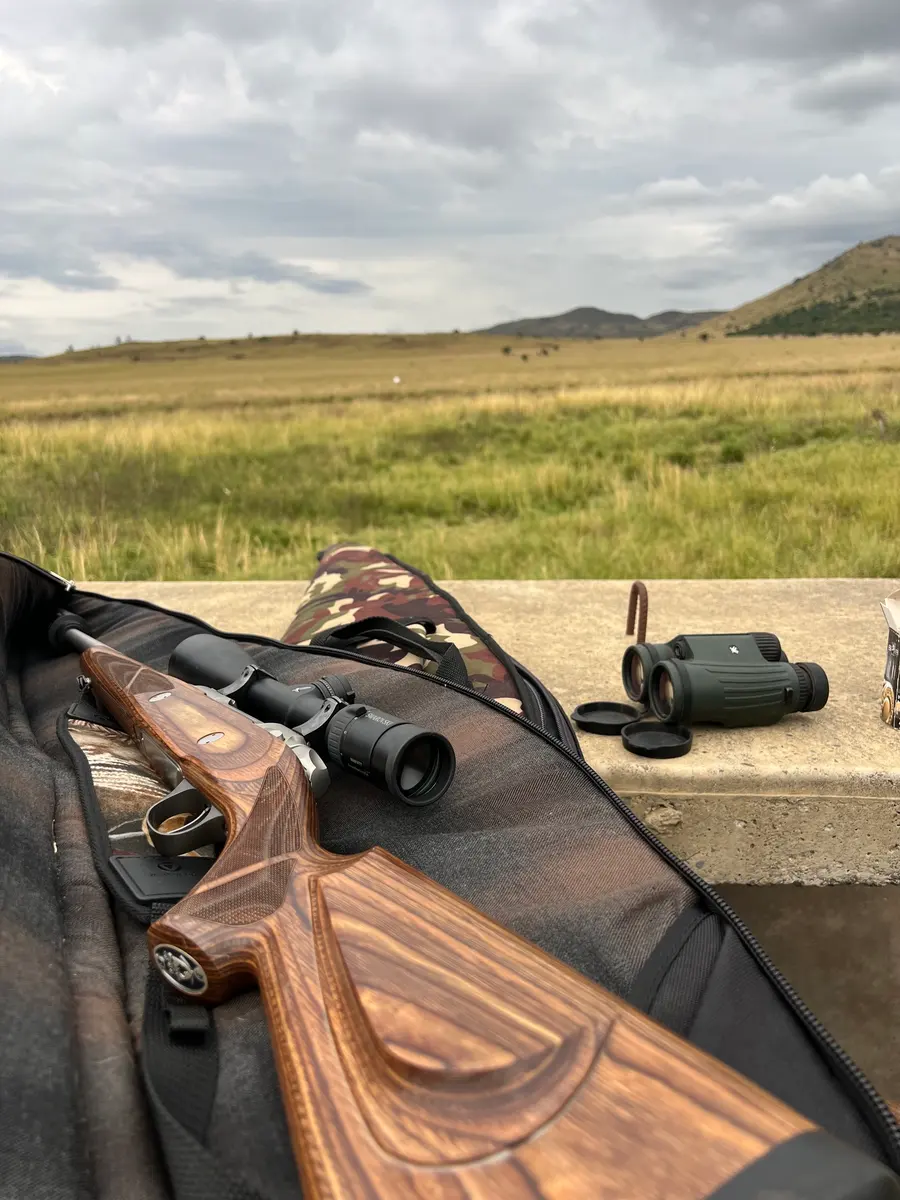
A 7mm or .30-calibre rifle with 150 to 200 grain premium bullets covers the whole plains game list, including eland. Bring a rifle you shoot well off sticks. For Cape buffalo the legal minimum is .375. Sixty rounds is plenty for a week.
Our skinners prepare, salt and dry everything at the lodge, included in your rate. We then hand over to the taxidermist or dip-and-pack agent of your choice, who deals with export permits and shipping to your home country. Expect six to twelve months for shipped trophies. Taxidermy and shipping are for your own account.
A deposit confirms your dates. The balance of the daily rates and any trophy fees are settled at the end of the safari. We will set out the exact terms in your quote.
Seasons and what to pack
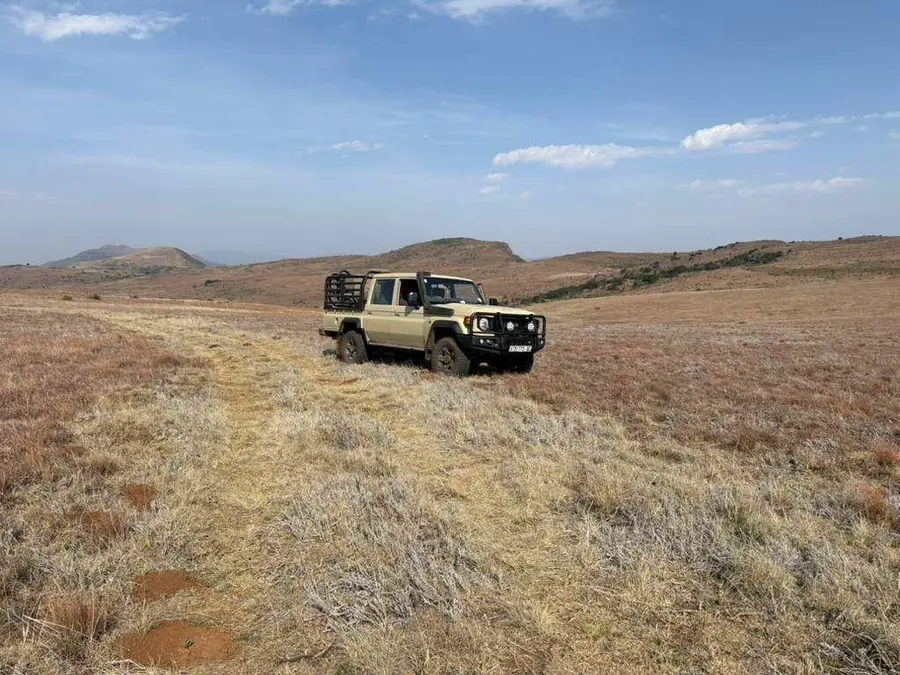
Queenstown, in the Eastern Cape of South Africa, has four distinct seasons, with hot summers and cold, dry winters. Temperatures can vary considerably through the day, particularly during hunting season, so we recommend packing layers.
Summer
- Daytime
- 27–30 °C (81–86 °F)
- Night-time
- 13–16 °C (55–61 °F)
Summers are generally hot, with temperatures occasionally reaching 40 °C (104 °F). Afternoon thunderstorms are possible. Pack lightweight, breathable clothing, a hat, sunglasses and sunscreen.
Autumn
- Daytime
- 20–27 °C (68–81 °F)
- Night-time
- 6–14 °C (43–57 °F)
Days gradually become cooler, while mornings and evenings can be chilly. Pack comfortable clothing for warmer days, along with a fleece or jacket for early mornings and evenings.
Winter
- Daytime
- 17–21 °C (63–70 °F)
- Night-time
- 2–5 °C (36–41 °F)
Winter days are generally dry and sunny, but mornings and evenings can be very cold, with frost possible. Warm layers are essential, particularly for early-morning hunting: thermal layers, warm socks, a fleece, a windproof jacket, a beanie and gloves.
Spring
- Daytime
- 23–27 °C (73–81 °F)
- Night-time
- 7–12 °C (45–54 °F)
Temperatures gradually warm up, although early mornings and evenings can remain cool. Pack lightweight clothing for the day, warmer layers for early starts and a lightweight waterproof jacket.
These are approximate seasonal temperature ranges. Actual conditions can vary, and occasional heatwaves or cold spells may bring temperatures outside these ranges.
A note on packing
As hunting often starts early in the morning, we recommend bringing practical, comfortable clothing that can be layered as temperatures change.
There is no need to overpack. Daily laundry service is available at the lodge, so you can travel with fewer clothes.
We will also send you an updated local weather report a few days before your arrival to help you prepare and pack accordingly.
The short list
- Neutral-coloured clothing in layers
- A warm jacket, beanie and gloves for the mornings
- Broken-in boots with ankle support for the rocky ground
- Good binoculars, 8x or 10x
- Sunscreen, lip balm and a wide-brim hat
- Camera, and spare batteries for everything
- Your firearm paperwork, printed, in your hand luggage
- A soft case to carry the rifle around camp
Bringing your own rifle
South Africa issues a temporary import permit for hunting rifles at the airport on arrival. It is a routine process if the paperwork is in order, and we walk you through it before you fly. Arranging the permit is the hunter’s responsibility.
- Complete the SAPS 520 form, but do not sign it until you are in front of the police officer at the airport.
- Bring proof of ownership (for US hunters, the Customs Form 4457) and a copy of your passport and return ticket.
- We send you an invitation letter from Thompson Safaris confirming your hunt and dates.
- Pack rifles in a lockable hard case, ammunition separately in its original boxes, no more than 200 rounds per rifle.
- One rifle per calibre, no handguns for hunting, and no semi-automatics.
Rather not travel with a rifle? Ours are available at $40 a day with ammunition sold per round. See rifle hire on the price list.
Questions before you book?
Send them through. We would rather answer ten questions now than one surprise later.